You will learn how to design, conceal, and trigger brief, inexplicable acoustic events that produce gentle curiosity around the house. Discover techniques for sound placement that defy immediate directional detection.
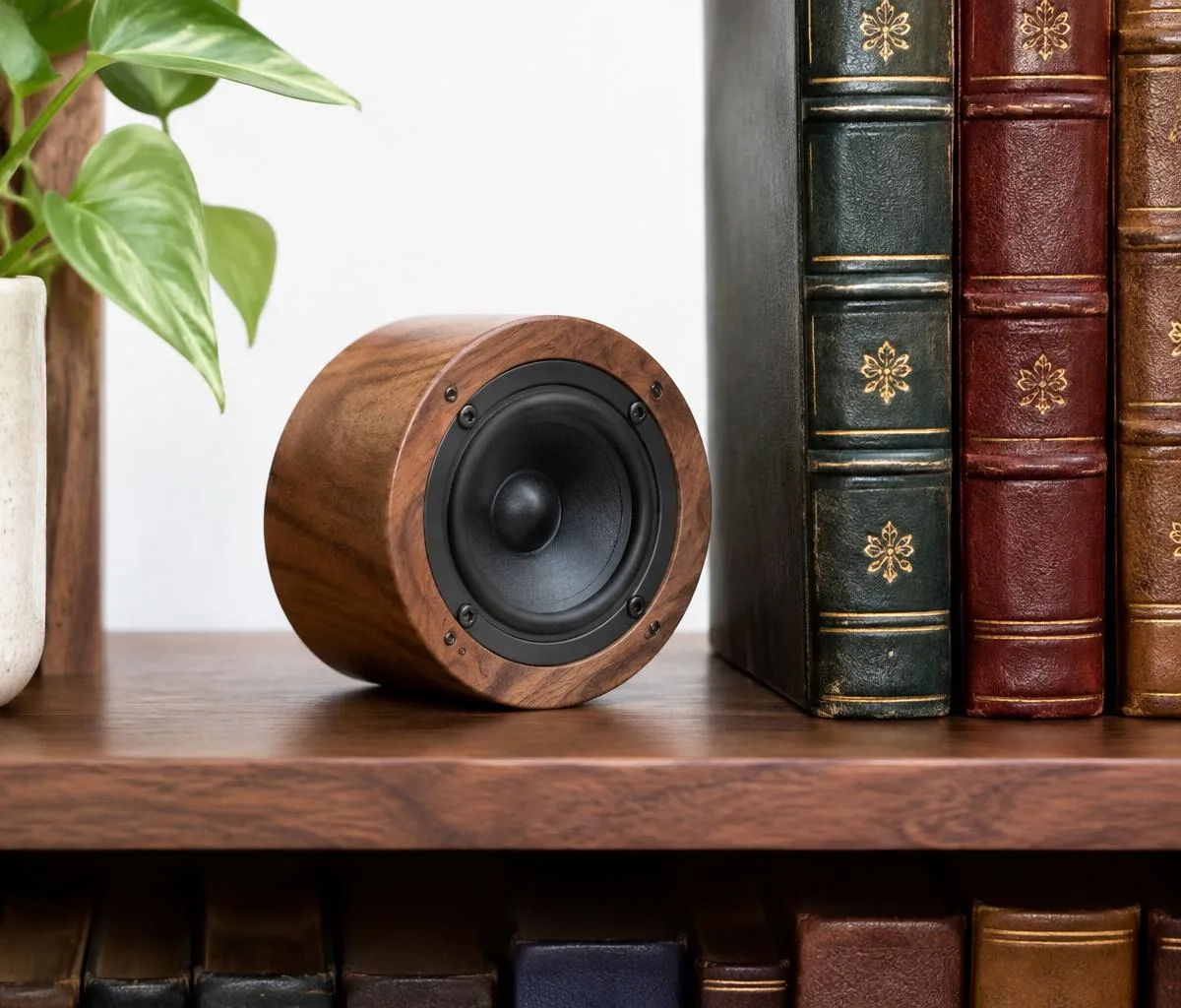
- Subtle, organic sounds like a faint chime or soft croak arouse more interest than loud alarms.
- Reflective acoustic surfaces such as porcelain or glass help diffuse the origin point.
- Spacing intervals randomly prevents listeners from locating the source through simple triangulation.
The practice of planting unexplained auditory phenomena within a domestic interior occupies a peculiar corner of practical humor. When stripped of theatrical jumpscares and abrasive electronic tones, an audio cue becomes an ambient riddle: a quiet discrepancy in the room that invites scrutiny rather than annoyance. The goal is not to disorient a guest or a partner to the point of distress, but to introduce a gentle, recurring question mark into their afternoon. A properly engineered acoustic mystery presents itself as an organic feature of the building, coaxing the listener into an investigative posture before revealing its deliberate, comedic intent.
Executing such a diversion demands a degree of technical discipline that borrows equally from Foley sound design, small-scale electrical engineering, and situational restraint. If the volume is set three decibels too high, the illusion collapses into irritation. If the sound profile feels synthetic, the listener suspects a rogue appliance or an errant notification bell within seconds. Success rests on crafting soundscapes that mimic the structural physics of the residence, anchoring the sound to hidden physical objects, and orchestrating the playback schedule with cold, mathematical patience.
Acoustic Camouflage: Selecting Natural Timbral Profiles
A sound designed for domestic camouflage must match the mechanical and acoustic vocabulary of its intended room. A kitchen accommodates metallic ticks, hydraulic sighs, and low resonant hums, while a study or library tolerates dry paper rustles, leather creaks, and the dull settling thud of joined timber. Introducing a synthetic tone or an uncompressed chime into either environment shatters the conceit instantly. The acoustic profile should register below the threshold of active attention, occupying the peripheral awareness of the listener until its subtle recurrence establishes a pattern.
To produce believable assets, record raw samples from the actual materials present in the target space. A cast-iron skillet cooled with a single droplet of water, the stress-creak of an ash chair rung under uneven pressure, or the hollow scrape of a ceramic coaster on unvarnished oak provide the necessary timbral pedigree. Synthesizers, regardless of their modulation complexity, invariably lack the microscopic imperfections inherent in physical collisions. When capturing these samples with a portable condenser microphone, maintain a sampling rate of at least 48 kilohertz at 24-bit resolution to capture the air and low-level resonance of the room.
| Target Environment | Suggested Acoustic Material | Frequency Emphasis | Decibel Target (A-Weighted) |
|---|---|---|---|
| Kitchen / Scullery | Porcelain on marble tap, pilot flame pop | 1.8 kHz to 3.2 kHz | 32 dB to 38 dB |
| Library / Study | Binding glue stress, dried timber settle | 220 Hz to 680 Hz | 27 dB to 31 dB |
| Entrance Hall | Brass latch rebound, baseboard tick | 4 kHz to 7.5 kHz | 30 dB to 35 dB |
| Dining Room | Crystal rim vibration, silver friction | 8 kHz to 12 kHz | 24 dB to 28 dB |
Equalization requires aggressive sculpting. High frequencies above 10 kilohertz must be tapered off with a gentle 6-dB-per-octave low-pass filter to replicate the sound-dampening qualities of interior soft furnishings. Simultaneously, strip away low-end rumble below 80 hertz, which rarely occurs naturally in furniture-scale sounds and serves only to strain miniature speakers, producing telltale distortion that reveals the electronic nature of the source.
Hiding Miniature Transducers in Everyday Furniture
Conventional cone speakers are poorly suited for this work because they project directional sound from a visible aperture, which the human ear locates with troublesome ease. Miniature surface transducers, often termed exciter discs, are far more effective. These small coin-sized devices lack a traditional speaker cone; instead, they feature a moving voice coil that mechanically couples to a rigid surface, transforming that surface into the acoustic radiator. When an exciter is affixed to the underside of a mahogany console table, the entire slab of timber produces the sound, scattering directional cues and rendering pinpoint localization nearly impossible.
Placement demands an eye for both acoustic coupling and line-of-sight concealment. Select surfaces with sufficient rigidity and internal air volume to serve as sounding boards:
- Hollow-Core Cabinet Doors: The interior cavity provides natural amplification and a woody resonance, while the thin skin vibrates readily under low-wattage drive.
- Undersides of Heavy Hardwood Tables: Yields a deeply muffled, warm response that sounds as though it originates inside the floor joists or the leg joints.
- Behind Baseboards or Picture Frames: Fastening an exciter directly to the back of a canvas stretched on a pine frame produces a remarkably crisp, diffuse acoustic field.
- Inside Empty Ceramic or Enamel Vessels: Using a 19-millimeter transducer against the base of an umbrella stand or bread box produces an unpredictable ring that confounds room-scale tracking.
Attachment should be semi-permanent. Cyanoacrylate glue provides the crispest acoustic transfer but damages fine veneers upon removal. A thin disc of thermal conductive epoxy or an industrial high-bond acrylic tape offers sufficient mechanical transmission without permanently scarring family heirlooms. Route the signal wiring along the rear chamfers of legs or inside grooved trim, securing the thin enamel-coated magnet wire with dots of water-soluble hide glue that peel away clean with warm water when the project concludes.
Programming Irregular Intervals for Maximum Intrigue
The cardinal error of audio trickery is the rigid timer. If a sound plays every seven minutes, the human brain detects the cadence within three cycles, categorizes it as a machine error, and ignores or hunts it down with mechanical irritation. The illusion thrives on unpredictability, which requires programming intervals governed by semi-random mathematics. A microcontroller, such as an ESP32 or an Arduino Nano, connected to a micro-SD audio playback board, serves as an inexpensive and compact brain for the operation.
Rather than using pure random distribution, which often clumps multiple playback events together or produces stretches of silence lasting several hours, employ a bounded Poisson distribution or a modified Gaussian curve. Set a hard floor and a variable ceiling. For instance, establish a minimum quiet interval of 8 minutes, supplemented by a random delay between zero and 26 minutes. This ensures that the cue never overlaps with itself, yet never adheres to an identifiable clockwork rhythm.
Environmental triggers enhance the puzzle considerably. Rather than relying entirely on a static timer, wire a small passive infrared sensor or a light-dependent resistor into the system. Programming the audio cue to trigger only when ambient light shifts by roughly 15%, or when three minutes of unbroken silence have elapsed following a detected footfall, creates the eerie impression that the household itself is reacting to human movement. The listener pauses, wonders if they heard anything at all, and is drawn deeper into the parlor game.
The Principle of Diminishing Repetition
A joke prolonged without resolution becomes an endurance trial. In ambient acoustic comedy, this risk is mitigated through diminishing repetition: the practice of making each subsequent iteration of the audio cue shorter, quieter, or subtly modified in pitch until the sound dissolves entirely. This design mimics the natural settling behavior of old buildings, where materials adjust to shifts in temperature or humidity and then go quiet for the remainder of the evening.
Structure the sound bank with eight to twelve variations of the baseline cue. The initial playback might feature the full, unambiguous signature: a double wooden tap followed by a half-second resonance. By the fourth iteration, the second tap is omitted, and the overall amplitude drops by 2 decibels. By the seventh iteration, the cue is reduced to a microscopic mechanical tick, barely hovering above the room background noise level of 28 decibels. This descending ladder accomplishes two critical comedic tasks:
- It provokes self-doubt: The listener, confident they heard an explicit mechanical sequence earlier, is forced to re-evaluate their own sensory baseline as the cues grow more elusive.
- It establishes a natural conclusion: The apparatus gradually retires itself before its presence grows grating, leaving the listener to ponder whether the phenomenon was artificial or simply the normal respiration of an eccentric house.
A simple counter in your code can govern this progression. After a predetermined sequence of activations, say, nine events over an evening, the device enters a deep sleep state that requires a physical power cycle to reset. This prevents the cue from firing at three o'clock in the morning, preserving the comedic tone and protecting household sleep hygiene.
Closing the Acoustic Mystery Before Frustration Sets In
The comedic value of an ambient riddle is realized entirely in its revelation. If the listener abandons the search in genuine frustration, or if they dismantle a piece of drywall seeking an imaginary water leak, the endeavor is an objective failure. The architect of the riddle must monitor the room and recognize the exact inflection point where amused curiosity threatens to curdle into genuine irritation. This window rarely lasts longer than forty to sixty minutes from the moment the listener actively begins hunting for the sound source.
A physical reveal should be woven into the puzzle itself. One elegant method involves tying the final iterations of the cue to an interactive household item. If the transducer is mounted inside an antique roll-top desk, the seventh or eighth sound profile might include the distinct sliding rattle of a specific internal drawer. When the target inevitably inspects that drawer, they should find not just bare wires, but a hand-written note, a vintage brass key, or an absurd token that confirms their victory in the unspoken game.
If the listener does not locate the source on their own, the host must supply an understated, well-timed prompt. A casual remark, such as noting that the tea chest appears particularly vocal this evening, shifts the listener from blind search to targeted discovery. The tone must remain light and conspiratorial; the goal is to make the subject feel observant for having noticed the cues in the first place, rewarding their attentiveness with a neat mechanical payoff.
Common Mistakes
- Excessive Sound Pressure: Calibrating the cue in an empty room usually leads to excessive volume. A sound that registers at 45 decibels in an empty hallway sounds like a dropped hammer in a quiet evening living room. Calibration must occur with all customary furnishings and background appliances running.
- Direct Optical Visibility: Using components with unshielded power LEDs. A flashing red or blue surface-mount diode on an exposed micro-controller reveals the trick immediately in a dimmed room. Desolder these lights or coat them in two layers of black liquid electrical tape.
- Overly Familiar Audio Signatures: Using system default sounds, recognizable smartphone clicks, or ubiquitous stock audio samples. Observers recognize modern operating system UI elements subconsciously within a fraction of a second.
- Physical Structural Damage: Fastening hardware with invasive screws or stubborn solvent-based adhesives. All installations must be non-destructive; consulting a qualified cabinetmaker or conservator is recommended before mounting components to antique joinery.
Practical Next Steps
Beginning this pursuit does not require an advanced degree in acoustics, but it does reward methodical bench testing before bringing hardware into the living quarters. Start by assembling a modest prototyping kit: a low-power DFPlayer Mini board, an 8-ohm 24-millimeter exciter transducer, an inexpensive Arduino-compatible development board, and a 3.7-volt lithium-polymer cell with a basic step-up regulator. These components can be purchased for modest sums from electronics supply houses and assembled on a breadboard in an afternoon.
Spend an hour recording five variations of a single physical action around your home, such as a gentle knuckle-knock against a hollow plaster wall or the scrape of a drawer slide. Load these files onto a micro-SD card formatted to FAT32, apply a high-pass filter at 100 hertz in open-source editing software, and run a baseline sketch that plays an audio file every twelve to twenty minutes. Attach the transducer to the underside of a secondary piece of furniture, such as a laundry room shelving unit or a garage workbench, to observe how the structural materials color the sound before deploying the apparatus in a populated living space.
The scenarios described herein are intended solely for lighthearted social entertainment among consenting acquaintances, and readers must exercise sound personal judgment regarding local laws, property safety, and individual sensitivities. Disclaimer