
You will understand how to introduce subtle, cumulative absurdities into a shared workspace without disrupting professional duties. Learn to calibrate a slow-burn joke so that colleagues gradually piece together the harmless pattern.
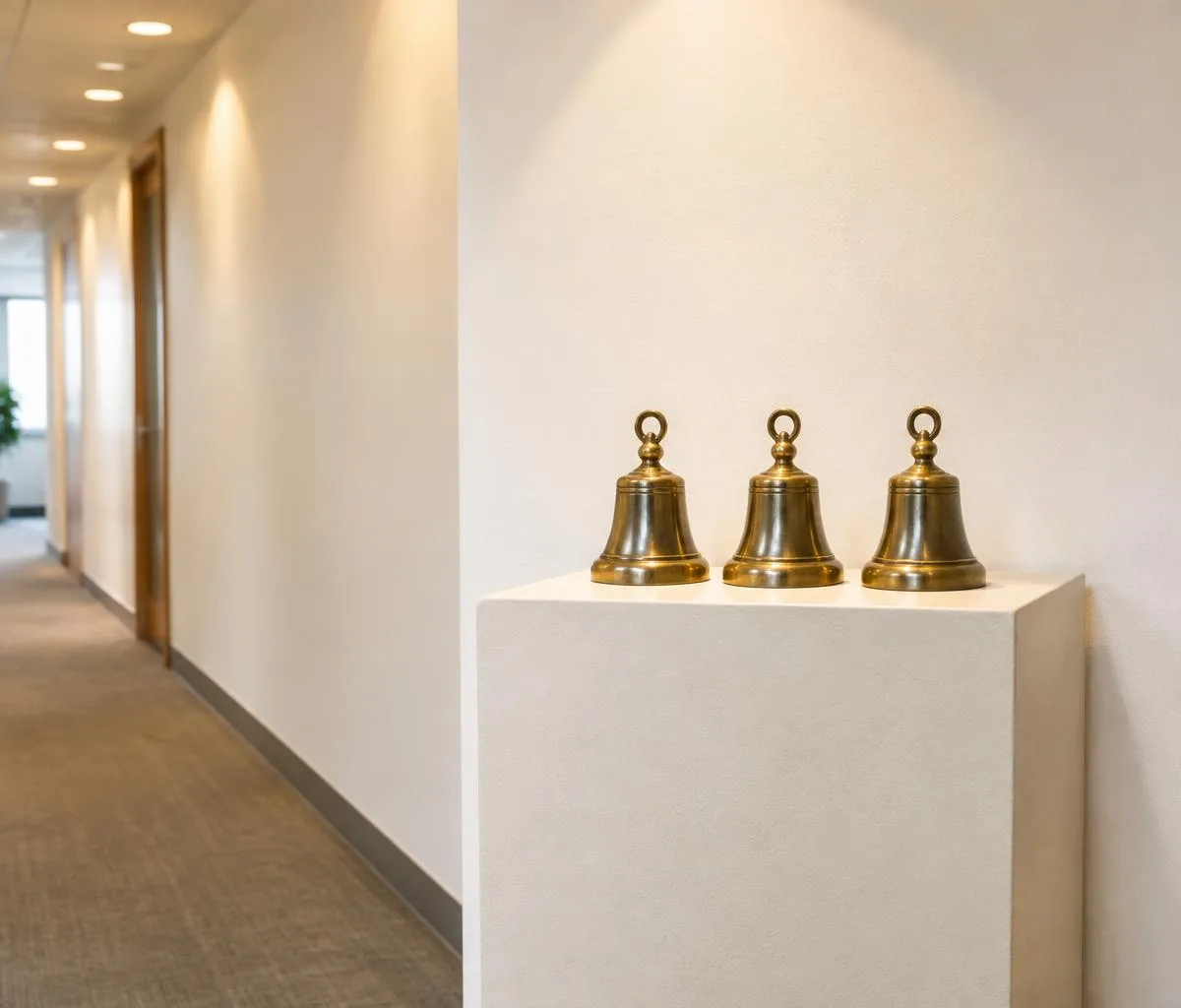
- Patience is essential, as the comedic value increases when clues appear days apart.
- Never tamper with functional machinery, active documentation, or urgent deadlines.
- The instigator must remain completely neutral when the realization finally dawns on the room.
The sudden practical joke is an aggressive medium. It relies on surprise, noise, and immediate shock, exhausting its theatrical capital within thirty seconds and leaving behind an uncomfortable residue of social obligation. The long-form running gag operates under an entirely different discipline. It exists on a geological timescale, altering the sensory environment of an office so slowly that colleagues question their own memory before they suspect an active human architect. Done properly, it is less an ambush than an atmosphere, requiring quiet administrative rigor and an instinct for the baseline rhythms of corporate habit.
To sustain an operational gag across several months demands structural patience. The perpetrator must surrender the cheap pleasure of the immediate reveal. In exchange, they cultivate a sustained, low-level atmospheric absurdity that can quietly animate an otherwise monotonous quarter. The goal is never humiliation; rather, it is the introduction of a deliberate, elegant glitch into corporate daily life, sustained until the community itself begins to adopt and protect the premise.
Principles of the Incremental Narrative
Every effective long-form joke relies on the Weber-Fechner law of psychophysics, which dictates that the perceived change in a stimulus is proportional to the original stimulus itself. If an empty meeting table suddenly contains forty ceramic sheep, security cameras will be reviewed within the hour. If, however, a single ceramic sheep appears beside the conference speakerphone on a Tuesday morning, it will be ignored or assumed to belong to an absent facilities manager. The narrative builds strictly through mathematical pacing.
The pacing must accommodate the collective blind spots of the floor plate. Changes introduced on Monday mornings vanish into the cognitive blur of incoming electronic mail, while alterations made on Friday afternoons are overwritten by the weekend. Mid-week placement, particularly in the quiet lull between two and four o'clock, allows the object or modification to integrate itself into the geography of the room during normal human movement. The perpetrator must never be observed lingering near the site of insertion.
| Operational Interval | Volume of Change | Expected Reaction | Risk Index |
|---|---|---|---|
| Days 1 to 14 | Single item introduced | Complete sensory dismissal; assumed clerical detritus | 4 percent |
| Days 15 to 35 | Duplication at 7-day intervals | Transient glances, minor private bewilderment | 12 percent |
| Days 36 to 60 | Clustering and micro-positioning | Watercooler speculation; initial documentation | 28 percent |
| Days 61 to 80 | Final scale expansion | Open floor-wide discussion; mythology takes hold | 67 percent |
The narrative arc must also respect the principle of narrative conservation. An incremental story does not need subplots or sudden variations in tone. If the premise is that a framed photograph of a 1984 Toshiba copier is gradually replacing an executive landscape, one must not introduce plastic dinosaurs or humorous captions. The integrity of the gag depends entirely on its austere, humorless consistency.
Selecting the Right Inanimate Object for Duplication
Selection of the prop dictates the longevity of the enterprise. The item must be sufficiently mundane to evade security scrutiny, cheap enough to purchase in quantities of thirty or forty, and inert enough to resist custodial disposal. Disposable coffee cups are thrown away; electronics invite safety inspections; items of obvious value are gathered and placed in lost property within twenty-four hours. The ideal object exists in the ambiguous middle ground of office property, looking slightly deliberate yet unmistakably useless.
Standardized desktop hardware offers an exceptional surface for duplication. A single model of wooden drafting ruler, a specific 60-millimeter yellow synthetic stress ball, or identical brass coat hooks attached to an empty partition will confound viewers because they mimic official purchasing channels. If the item looks as though it might have been ordered through an automated enterprise resource portal by a confused regional logistics officer, people will permit it to exist for months without formal inquiry.
- Small wooden spools: Unvarnished and measuring two inches, these suggest architectural modeling or forgotten craft projects.
- Laminated safety notices regarding non-existent hazards: Warnings concerning acoustic refraction or carpet humidity create bureaucratic paralysis.
- Identical pocket calculators from 1993: Utterly neutral, non-threatening, and cheap when acquired from surplus auctions in lots of twenty-four.
- Porcelain woodland creatures: Specifically hedgehogs or badgers measuring under three inches, devoid of humorous facial expressions.
Scale dictates logistics. The items must fit within an ordinary commuter bag without bulging. Transporting the entire inventory into the facility in a single oversized cardboard box introduces unnecessary exposure; bringing three units per day over an eight-week span distributes the transport footprint entirely.
Maintaining Plausible Deniability Without Lying
The legalistic defense is the only sustainable position over an extended campaign. Lying outright creates social debt, damages professional trust, and leads to an awkward unraveling when evidence emerges. True plausible deniability relies on literal truth, misdirection through tone, and the careful exploitation of corporate assumptions. When asked directly if you know why there are eleven identical ceramic owls along the baseboard of the server corridor, the correct response is not a nervous denial, but an observation of fact.
State what you see, not what you did. Saying "I noticed those appeared around mid-November" is entirely factual if you did indeed place the first one on the twelfth of that month. Answering a query with an administrative counter-question, such as inquiring whether the items are interfering with floor maintenance or asking if they fall under the remit of the art committee, instantly converts a potential confrontation into a speculative discussion about facilities management.
Facial control requires practice. The default expression when confronted with an escalation in the gag must be mild, polite exhaustion. Smiling, smirking, or looking around to see if others are watching will mark you as the origin point immediately. You must treat the accumulating anomaly with the exact same deadpan indifference that you reserve for updates to the corporate travel policy.
The Safety Buffer: Protecting Critical Office Operations
A long-form gag ceases to be an intellectual exercise the moment it interferes with client billing, data transmission, physical egress, or life safety systems. Facilities staff and cleaning crews are working professionals with rigid schedules; an operation that complicates their nightly routine is an unprofessional nuisance. If a gag requires janitorial staff to move heavy boxes or spend additional time vacuuming around fragile obstacles, the scenario is flawed in its conception.
Establishing clear boundaries is essential before introducing the first piece of physical material. These restrictions are non-negotiable and must be maintained regardless of how tempting an escalation might appear:
- Keep all objects at least forty-eight inches clear of emergency exit corridors, fire extinguishers, and automated defibrillator stations.
- Avoid all server rooms, patch panels, electrical closets, and primary distribution frames where dust or accidental contact risks infrastructure downtime.
- Refrain from using personal workspaces, monitors, or chairs belonging to colleagues without their implicit consent; shared, neutral spaces are the only acceptable staging ground.
- Ensure no element of the staging mimics legitimate compliance materials, fire alarms, toxic spill markers, or medical alerts.
If an enterprise operates under specific regulatory scrutiny, such as financial compliance monitoring or occupational safety audits, consult the published site handbooks to understand where visual inspections occur. Placing anomalies in paths frequented by external auditors invites formal documentation and unnecessary corporate anxiety, which terminates the humor instantly.
Concluding the Series Before the Joke Grows Stale
The most delicate phase of the operation is the terminal sequence. Every running gag follows an inverted parabolic trajectory: it begins with quiet intrigue, rises to peak communal engagement, plateaus into familiarity, and eventually collapses into irritation. The art lies in executing the conclusion precisely at the peak, while the phenomenon still commands attention and before facilities management issues an irritable floor-wide directive.
The resolution must be clean. A common mistake is allowing the duplicated objects to drift into neglected dust traps, slowly kicked under desks until they are unceremoniously swept into a trash bin during an office refurbishment. The ending should be as deliberate as the inception. A sudden, overnight disappearance of the entire installation frequently yields a stronger comedic impact than the original accumulation. Arriving at dawn to remove all thirty-four calculators leaves an empty space that colleagues will stare at with genuine bewilderment throughout the following week.
Once gathered, the assets require a disposal or dispersal strategy. They should never be discarded if they retain practical utility. Quietly depositing them in the office kitchen with a sign reading "Free to a good home" breaks the fourth wall awkwardly. Instead, box them, remove them from the premises entirely, and donate them to a regional charity shop or secondary school art department. The narrative remains intact only if the void remains unexplained.
Common Mistakes
Even meticulous planners falter when vanity overrides operational restraint. The errors below represent the most frequent points of failure observed in corporate staging:
- Confessing under low social pressure: Admitting involvement over drinks on a Thursday evening simply to claim temporary credit ruins months of sustained patience.
- Accelerating the volume too early: Placing ten items in week two because the initial two went unnoticed destroys the required incremental curve.
- Using digital assets instead of physical ones: Altering shared network drives, intranet pages, or digital signature templates invites the intervention of information security teams who possess comprehensive audit logs.
- Selecting polarizing subject matter: Using items associated with politics, religion, or polarizing cultural debates transforms an innocent absurdity into a human resources dispute.
Systematic Execution
For those intent on establishing a measured, long-form intervention within their own workspace, proceed through the following non-negotiable sequence:
Conduct a spatial reconnaissance. Walk the shared floor plate during three distinct periods: early morning before general arrival, the mid-afternoon transition, and the quiet hour following the departure of the primary workforce. Identify two dead zones: sightlines that are passed thousands of times daily by staff but examined critically by nobody, such as the ledge beneath a decorative architectural pillar or the top of an archive cabinet.
Procure the complete inventory at once. Sourcing items in staggered batches leads to discrepancies in color, production runs, or dimensions. Purchase thirty identical units from an industrial supplier or bulk auction site in one transaction. Store them off-site, bringing only the exact quota required for each day into the building.
Establish an unwritten withdrawal trigger. Determine in advance the exact condition that mandates immediate termination. If a senior partner mentions the objects during an operational meeting with mild irritation, or if a facilities officer is observed photographing the installation with an administrative tablet, the campaign is over. Arrive early the subsequent morning, clear the perimeter entirely, and return the environment to baseline silence.
The scenarios described herein are intended solely for lighthearted social entertainment among consenting acquaintances, and readers must exercise sound personal judgment regarding local laws, property safety, and individual sensitivities. Disclaimer